Three National Leaders. One Destination for Brain & Spine Care: Advancing the Future of Neurosurgery at Baptist Health Previously Recorded: Live Webinar for Clinicians
Overview Join three nationally recognized leaders in neurosurgery for an engaging discussion highlighting the depth and breadth of Baptist Health Brain & Spine Care.
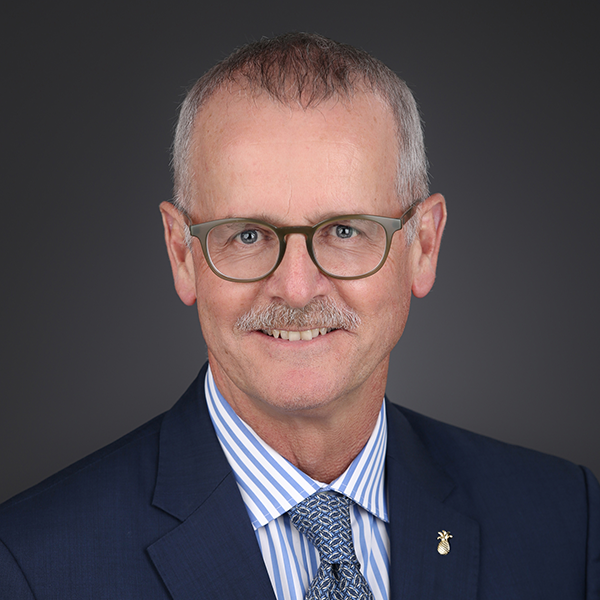
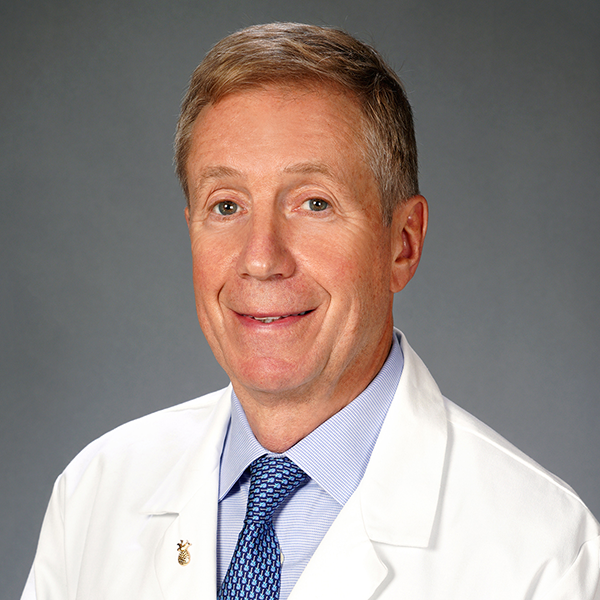
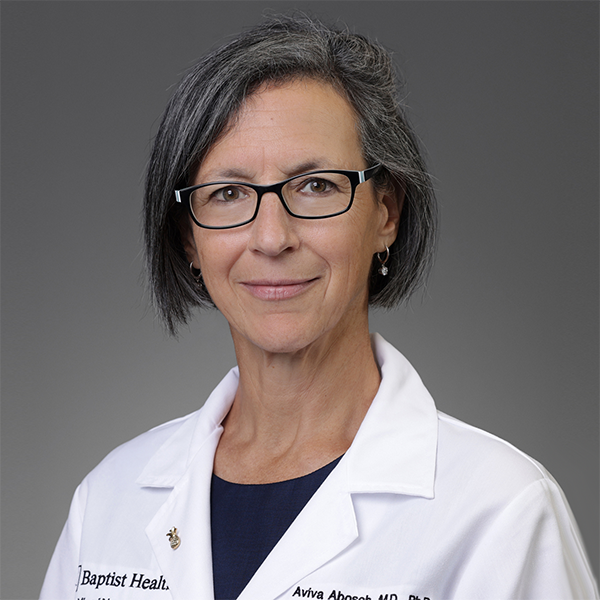
Representing Baptist Health Kenneth C. Griffin Neuroscience Institute and Marcus Neuroscience Institute, Drs. Michael McDermott, Warren Selman and Aviva Abosch will explore the latest advances in the diagnosis and surgical treatment of complex neurological disorders. Through multidisciplinary collaboration, innovative technology and nationally recognized expertise, Baptist Health is advancing the future of neurosurgical care across South Florida.
Designed for referring clinicians, this educational webinar will provide practical guidance on patient selection, clinical indications, referral pathways and the advanced neurosurgical capabilities available at Baptist Health. Attendees will gain insights into when to refer patients for specialized evaluation and how coordinated, subspecialized care can help optimize outcomes for complex neurological conditions.
Topics Covered Faculty will discuss current approaches to the evaluation and management of a broad range of neurosurgical conditions and procedures, including:
Brain tumors, including meningiomas and glioblastomas
Cerebrovascular disease and stroke
Epilepsy surgery and advanced neuromodulation, including SEEG, RNS and VNS
Multidisciplinary treatment planning for complex neurological conditions
Patient selection, referral considerations and coordinated neurosurgical care
Learning Objectives At the conclusion of this webinar, participants will be able to:
Recognize patients who may benefit from referral for specialized neurosurgical evaluation
Identify clinical indications for referral across a broad spectrum of neurological conditions
Describe advances in neurosurgical techniques and technologies used to treat complex neurological disorders
Understand the value of a multidisciplinary approach to neurosurgical care and coordinated patient management
Navigate referral pathways that provide timely access to specialized brain and spine expertise at Baptist Health
Featured Faculty
Michael McDermott, M.D. Baptist Health Kenneth C. Griffin Neuroscience Institute
Aviva Abosch, M.D., Ph.D. Baptist Health Kenneth C. Griffin Neuroscience Institute
Hello, my name is Michael McDermott, and I am the assistant chief medical executive of Baptist Health Brain and Spine Care in South Florida representing the Kenneth C. Griffin Neuroscience Institute. Today I'm delighted to have Doctor Warren Selman, uh, Chief Medical Executive of Marcus Neuroscience at Boca Raton Regional Hospital, Chief of Neurosurgery at Marcus Neuroscience Institute in Florida Atlantic University, and Doctor Aviva Abosh. Uh, deputy director of the Kenneth C. Griffin Neuroscience Institute, chief of neurosurgery at Florida International University, and director of epilepsy surgery. I'd like to thank both of you for taking time out of the day to come here for this interview. And let's start by asking, um, Doctor Bosch a little bit about her neurosurgical training, fellowships, and her focused area of practice in neurosurgery. Doctor Bosch. Thank you for that. Uh, so, my, uh, training, uh, in neurosurgery, um, happened at, uh, University of California, San Francisco. We were on the faculty then when I, when I began my career, uh, or at least my training. And after completing neurosurgery residency, I went off to Montreal, the Montreal Neurologic Institute for a year of epilepsy surgery fellowship. From there, I moved on to the University of Toronto, the Toronto Western Hospital and did 2 years of stereotactic and functional neurosurgery fellowship. And then I began my career as an independent Fellowship trained, uh, stereotactic and functional neurosurgeon. Who was your mentor at, uh, Montreal? At Montreal, I worked under Andre Olivier, very famous internationally known, uh, epilepsy surgeon in Toronto. Uh, at Toronto I worked under, uh, Doctor Andres Lozano, uh, also, uh, uh, famous, uh, stereotactic and functional neurosurgeon, uh, who is still on faculty at, uh, University of Toronto, right? So 3 years of fellowship training after. 7 years of neurosurgery. 6 years of neurosurgery. 6 years. Wow. OK, let's, uh, ask Doctor Selman some of your background about your focus in cerebrovascular surgery training, fellowship, etc. Well, thanks, Michael. Uh, we've been a pleasure to be here. So my training is a little different. I did everything at one place in one of those rare birds. I went to medical school at Case Western Reserve University and stayed on actually to do my residency there at University Hospitals of Cleveland, and that was under Doctor Frank Nelson at first and then, uh, Doctor Robert Ratchison took over as chairman. And I, I joined the faculty and stayed on in the faculty and then rose up to the ranks there and stayed until I joined, uh, you down here in Florida. Cool. Ratchison was a vascular surgeon. Yeah, I had the good fortune of being with two, vascular surgeons. I did actually my research during my training. We had actually time for research a couple of years. And I did that with uh Doctor Robert Spetzler who had just joined us um from San Francisco as well um and was fortunate to be able to do my, my lab experience with him and then finish his training with him before he went out to the Barrow Neurological Institute. And then Doctor Ratcheson and he sort of overlapped and, and both were vascular surgeons. So did you see a special doing vascular cases in Cleveland? I did, yes, yes, and probably one of the best technicians you've ever seen, very, very much very skilled surgeon. Yeah, I was very impressed when I visited. Um, all right, let's stay with you, Warren, and, uh, ask about, uh, the transition in cerebrovascular surgery that's happened over the last 30 years, the shift from open. Um, cerebrovascular surgery to endovascular therapies. Um, can you talk about that? You lived through it, so let's, let's try to wipe away the tears and actually that's been a great thing, but it was, it was quite a change. Um, when I had finished up. Um, you know, I really just learned all the new microvascular techniques both for bypass surgery and for aneurysm clipping, uh, Yauser-Gill techniques, Segua. It was really an exciting time to be a young cerebral open cerebral vascular surgeon. Pretty much about 2 days after I joined staff, the landmark study came out showing that. Bypass surgery was really relatively ineffective, so that part of the practice went away pretty quickly and changed. And then as you said, the, the important things are that endovascular therapy was just beginning then I had the chance to work with a great, uh, endovascular person, uh, Doctor Rob Tower, who trained with some of the originals, uh, Kerber and and Horton. And they really brought a whole new fresh perspective to be able to treat aneurysm surgery. In the beginning, uh, it was, it was a little bit difficult. I mean they were not all that effective, but as you mentioned, it's been an evolution and over the last 30 to 40 years we have seen them really be able to effectively treat almost all types of aneurysms and allow the patient not to have to have an open procedure. It didn't mean the end of microvascular surgery, as you know, certainly there's still a need for that. Uh, we just now tend to see the cases that can't be done the other way. Yeah, I remember at University of California San Francisco Grant Hioshima, um, and Aviva remembers him. He would wear, he was Japanese and he'd wear a Japanese zero, bandana when he was doing cases like it was battle, and in those days they were putting balloons in the aneurysm. So, uh, we've come a long way, um, from that. Um, so, um, what are you doing currently in, uh, Marcus Neuroscience Institute in terms of your cerebrovascular program? You're the head neurovascular open surgeon. Tell us about your endovascular team. So our endovascular team is great. Uh, we've just expanded. We, um, have always had a, a great dual trained neurosurgeon, which I think gives a distinct advantage to make sure that. You know it's the old uh saying if all you have is a hammer everything looks like a nail you wanna make sure you have people who are duly trained, equally well trained and skilled in both areas. Now we have someone who's not a neurosurgeon trained but comes at it from another point of view, Doctor Ashihobo. And so the idea has always been to have a multidisciplinary team. I know you have that in in Miami and we have the same now. So we have vascular neurologists, vascular interventionists, neurovascular surgeons all really weigh in on what is the best way to treat each individual patient, and we're allowed to do that. Uh, fortunately, Mr. Marcus. Um, was really very proactive and thoughtful and said, you know, you need the best endovascular suite available. We've had that for some time now, and our, our practitioners are able to use that, uh, with the most modern techniques, uh, and the most modern imaging. Uh, there's a move amongst, um, the endovascular therapists to develop robotic methods for endovascular treatment. So he's sitting at a console and. Miami and the patients being operated on someplace in Central America, let's say for example, um, I mean, do you think that is a reality for the next 5 to 10 years or after 10 years? It's hard to say when it will happen. I think it's a great idea and it should be able to happen because, you know, there are strokes that are occurring in very remote areas and then no matter how hard we try to get every patient to a skilled therapist, that simply may not work in the amount of time that we have, even though that amount of time is getting longer every, every day. There are still gonna be limits to that we know that. So I think it only makes sense to have the ability for a skilled person to be able to really democratize, if you will, the, the spreading out of their, their treatments. So yes, I think it will happen, uh, you know, I never like to make predictions, especially about the future as Yogi Berra said, but I do think it'll come. Yeah, we, uh, you know, in, in some ways we're. Uh, we have an advantage, uh, in other ways a disadvantage when it comes to robotics because unlike the thorax of the abdomen, we don't have a cavity we can put multiple instruments into without affecting the tissues. But at the surface, do you think, you know, do you think, uh, you see an advantage for robotic ECIC bypass, for example? Well, that I can say with certainty is already here, so many of our colleagues are already using a device that allows us to do just that. And as you said, we, you know, we're not dealing deep in the center of the brain, we are on the surface. Now some of us as we get older have a little more tremor in our hand and certainly the ability to remove that with the robotics is great and the precise movement I think will allow again a democratization of of who can be able to perform those procedures which would be a good thing. Yeah, I'm I'm, I'm wondering whether or not with uh young individuals that. you know, grown up since the year 2000 for example and probably played a lot of video games and stuff, whether or not that kind of surgery will be easier for them than it was for us, right? Because they're used to using that interface so certainly be easier, um. Uh, I'm gonna ask one another question about, um, advances in technology for endovascular therapy. Like, are you involved in clinical trials now or are there new devices that are about to come to clinical trials for endovascular treatment? Could you talk about that? Yeah, absolutely. That is one of The, the refreshing things about that field, as you know, it, it really has advanced quite rapidly. You mentioned balloons originally being used and if you think about the short period of time that is to now we have devices that can actually make, you know, reconstruct a parent vessel to eliminate the aneurysm. Um, those are, those are just great advances that have allowed the endovascular therapists, the interventional folks, to really treat more and more aneurysms and to do it more effectively. In the past, you know, things were left behind and we'd watch it. So now that is occurring at, at a great and rapid pace. I think, yes, the short answer is we are involved in many, many clinical trials, probably over 20. Uh, our folks have always been interested in advancing the level of care, not just practicing what's currently available. Um, one, you know, Doctor Snelling actually was very instrumental in developing a radial access which allows us to get to the, to the clot in, in a quicker time than having to go through the groin and less discomfort for the patient. So we wanna keep advancing that and I think the short answer is it it it is happening due to the collaboration between our endovascular therapists and, and the industry partners we have. All right, thanks, Doctor Selman. Um, Doctor Bosch, you're an epilepsy and functional surgeon, uh, so there's a lot that's been in the press recently about technology, uh, being used for the brain-computer interface, um, and you can deliver those links between the brain and the outside world with a number of different methods, endovascular methods, open access. So I was wondering if you could. Yeah, give us your comments about the brain-computer interface technology and developments. It's a wildly exciting, uh, aspect of what we do or are capable of doing, um, you know, brain-computer interfaces, the intent there is to restore. Missing neurologic function, whether that's, you know, movement, um, uh, of the hand, uh, mobility, speech, vision, etc. There are many things that are, that, you know, people are picking away at from a neuroscience and a, um, engineering standpoint. Um, probably the closest effort to, uh, Being up to clinical utility is really The technology that's available for the treatment of epilepsy, where we have implanted devices that read brain signals that tell the device when a seizure is happening, that then translate into an affector arm to deliver stimulation to stop the seizure. That's an example of a brain-computer interface, and it helps our epilepsy patients and we implant it on a daily basis. Having said that, the future of that specific area is to figure out how to predict when a seizure is gonna happen before it starts and so we're not quite there yet and that remains something that we need to address as a field. Is that something where um AI would be of help to be able to interpret the electrical signals and do the. Uh, figuring out or run through the algorithm to know that, yeah, there's a seizure about to start. Absolutely. I mean, the, the, the answer is in figuring out the biomarkers and then being able to analyze the data in real time and translate that into the effective arm that delivers the therapy. So, artificial intelligence in that it includes Higher order Data data analytical tools as well as machine learning um uh algorithms is exactly what's needed for the decoding of those signals that come out of the brain. And is there a big, or do we know whether there's a difference in either the reproducibility or the longevity of the implants that are where platinum needles are inserted through the cortex into the brain versus on leg grids? So, so that's a very active area of research within the BCI field, the brain-computer interface field, and so reproducibility across patients. We're not quite there yet. In selected patients, certain things work really well, but when you try and reproduce it across the breadth of patients, we, we fail a bit from a brain-computer interface standpoint. The fidelity of the recordings over time, as, as, as you point out in your question, is something that we still have to contend with, and optimizing the electrodes really remains an active area of research. Yeah. So apart from instruments and implants, we know there's a number of biologic agents that are coming along. We're hoping 1218 months for things like Parkinson's, frontotemporal dementia, Huntington's chorea. We have purchased, you know, the technology to be able to allow you to. Do those things. Can you talk about the technology, um, and how that's used for, for example, convection hand slipper? Yeah, so, so dementia and restoring useful memory and judgment and other types of cognitive function that are capabilities that are lost in the setting of Dementia, that's probably not the most readily accessible application of of brain computer interfaces, uh, because of how widespread the changes, the loss of functional connections are in the brain. Having said that, Memory restoration. is probably the smaller aspect of that, that's that's The most readily available. But that's a good example of where the populations we've tested electrical stimulation and tend to be in the epilepsy populations where we can recover memories that are, uh, you know, that, that the patient has had previously. That's not the same as Attempting to restore memory in, in a dementia patient who has lost those functional connections. So, you start to think about what the role of biologicals are. So, for instance, attenuated viruses brought into the central nervous system that carry a payload that can affect some sort of a change, you know, whether it's change in neurotransmitter uh release. Um, you know, for the purposes of, say, epilepsy that can be very effective and so none of that is actually clinically available to us as yet, but we hope that in the near future these techniques will come in for restoration of function in patients with movement disorders like Huntington's, Parkinson's, etc. Yeah, I was very impressed at um one of our meetings when Doctor Kim Burchell. Presented the large primate model of the xenograph that he used for non-lesional medial temporal lobe epilepsy origin. Pretty amazing that they had to be, they would inject these cells. They were tagged with some kind of immunofluorescence. And the animal would have to be put on immunosuppression for a short period of time, I think it was about 1 year, but basically on day 2 after the implant seizure stopped. It was totally, and then they did the postmortem evaluations since this talk is for physicians. They did the postmortem evaluation of the primate and they could see the neuron growth into the dentate gyrus and stuff. It's pretty, pretty amazing. Now these therapies cost a lot of money. Uh, so for example, the gene therapy for sickle cell disease is a million dollars per treatment. Do we have any idea about the cost of any of these biologic therapies like for Parkinson's with adeno associated virus? Yeah, I, I think that those sorts of real numbers come out as things are getting prepped for release into the clinical marketplace, and they will be expensive. There's no question about it, but there's also, you know, uh, historical evidence that teaches us that the, the costs decrease over time for any given technology. But you mentioned the technologies that we have access to that enable us to Sit poised to embrace these novel technologies and, you know, the advent of intraoperative imaging, which didn't, uh, intraoperative MRI which didn't exist when I was, you know, um, beginning my residency, but was developed towards the end of my residency training, you know, and enables us to take advantage of things like convection enhanced. uh, for the treatment of various conditions, uh, the advent of lip, you know, uh, uh, laser inter interstitial thermal therapies for the treatment of deep-seated, for instance, uh, seizure onset zones for the epilepsy population. These are all things that have come out in the last couple of decades and are really, really have a huge impact on our epilepsy population. Yeah, even for us senior neurosurgeons, uh, it's kind of a fun time, right, with all the new technology. Coming along and um yeah, I think it'll even be more exciting with the biologic agents for the future generations of neurosurgeons. So uh there's someone I wanna swing back to you and ask you about um A couple of things about going back a little bit, not to biologics for cerebrovascular disease, but more about the robots in terms of, you know, you mentioned already we can do ECIC bypass. Do you think we'll be able to do those remotely like telepresence, like do a bypass? In, um, you know, Central South America, Asia, I don't know, I mean, Middle East, who knows? Yeah, I mean, you know, again, we have the technology, we've seen the robots work, uh, we use them in practice now, and the only difference is the distance. So as long as you have, you know, the appropriate teams in both places, I, I, I do think. That'll happen because as you know not only nationally but worldwide there is a a very much a shortage of neurosurgeons so one of the ways to get around that is to improve the technology so you can have the surgeon do more and at different places where people may not wanna, you know, live their whole life. Can you imagine a day where an intraoperative dissection with Sylvia Fisher inter hemispheric fissure. Uh, internal carotid A1M1 segment occurs and that there's a picture of that vascular anatomy that's analyzed by artificial intelligence that knows that that's the A2 segment, that's a com that's the other A2, that's Hubner, and then a robot arm comes in that you can control. And you can put the aneurysm clip on. You think I thought you were gonna go one step further and say, can you imagine, and I won't be there or you won't be there, but the AI will do it by itself. That I, that I, I don't know. I don't even wanna speculate on that. I mean, I was, no, I one time hooked myself up to EKG, ECG monitors, um, when I was clipping an aneurysm. I wanted to know when and if my heart rate went up, and it was actually. Right as the clip was released is when I got this. Have you noticed that? And sometimes when we're putting the clip on, you know, you have to wiggle a little bit and you're concerned about the aneurysm rupturing. I wonder how a robot would do with that because they'd have no concern about whether the inner ruptured intraoperate. It's they just go in there and boom. Well, we'd have to hopefully they, they program that in there. But yeah, I do remember those moments and I do know what my heart rate is. Yeah, so, all right, um, Doctor Bosch, you do deep brain stimulation for Parkinson's disease. You also do epilepsy surgery, and there are a number of open and stereotactic treatments for. Uh, different types of epilepsy, but can you break it down a little bit for us? Like what type of epilepsy is, is appropriate for laser interstitial therapy, for example, and what type of epilepsy is appropriate for corpus callosotomy or temporal lobectomy or lesionectomy? Sure. So, um, the, you know, there, there is an enormous denominator, if you will, of patients. With epilepsy seen by the epilepsy neurologists who are never referred to me as an epilepsy surgeon because they're Their seizures come under control with the use of medications. Maybe not the first agent that's attempted, but the subsequent agents, you know, uh, seizure medications that are attempted. But then as you move up in that pyramid of patients who become surgical candidates, you start to see patients who have A known seizure onset zone that's accessible, uh, and then the decision tree becomes is it an area that will that removal of that area will result in a disruption of function or can we remove that area safely and stop. The seizures without interfering with function. So that decision tree then becomes one of consideration of laser ablation if it's a deep-seated um uh area that would involve destruction of overlying brain structure before you get to that area versus. Uh, craniotomy for removal of that, that lesion or that seizure onset zone to uh hopefully control the seizures. So that's one group of patients that we see. And sometimes, sometimes whether or not it's a unique seizure onset zone and exactly where it is within the hemisphere is not known either. And those are the patients who are now eligible for robot assisted stereo EEG. As a diagnostic procedure to sort out where the seizure onset zone is, whether or not it's unique, whether or not with stimulation mapping through those same electrodes that we implant in the robot-assisted stereo EEG, we can figure out if function is, would be would be destroyed by removal of that area. So that's one population of patients. Then there are patients for whom removing the seizure onset zone is not going to fix the problem, but Modulating the seizure networks can have a profound effect on decreasing the frequency and the severity of the seizures. And for that patient population, we think of neuromodulation. So, skull-mounted RNS responsive neural stimulation, which I mentioned, uh, deep brain stimulation, which can have a similar, uh, effect as RNS. But it is not a closed loop system. It doesn't, it's agnostic to what the, the seizures are doing in the brain, uh, and then VNS, which is accessing the vagus nerve in the neck to supply pattern stimulation to the brain to, uh, through that mechanism, decrease seizure frequency and severity. So, the interesting thing in, in my training and professional lifetime has been that We have moved away from the notion that there's a unique target that we have to remove or stimulate to the notion that this is neural pathway modulation. Even when we're taking out a a seizure onset zone, we're really modulating pathways. And so the technology has evolved tremendously, but even more so has been the underlying clinical science that guides what we do. Yeah, so what about, um, what's the epidemiology of adult epilepsy as it relates to the percentage of patients who should be candidates for surgical intervention to improve their seizure control? Like what percentage of. Adults with epilepsy are potential surgical candidates. Well, it's a small fraction of that denominator that I mentioned because of um the advent of the, you know, effective anticonvulsants which eliminate, you know, a certain percentage of the adult population with epilepsy from consideration for surgery because from a risk benefit standpoint it doesn't make sense. Having said that. Many of the epilepsy medications are teratogens or significant teratogens. So if you have a woman of childbearing, rearing, bearing age, um, who is on anticonvulsants and she would like to become pregnant, that becomes a different discussion because the only way to get them off the, the seizure medications is to stop the seizures. So Then you had mentioned previously, you know, corpus callisotomies and um you know, why would I consider that for a patient. Corpus callisotomy really uh is Intended for patients with Seizures that resulted in atonic Uh, drop attacks essentially where the lights go out and the patient falls and it's a completely unprotected fall. They wind up with head injuries, you know, facial injuries, etc. Those patients are not a minimum, that's not a, uh, focal epilepsy process. That is a generalized process. It involves, you know, both hemispheres. Um, those patients have, are eligible for vagus nerve stimulation as an initial attempt, and if that fails or when that fails, then corpus callisotomy can be, uh, tremendously effective for preventing the atonic attacks. Yeah, we, I remember a case of just that where the individual was on 8 different medications and Um, presented a conference, had a corpus callisotomy, and the 1st 30 days after the colosotomy, no seizures. So in that case, it was traumatic. Um. And working in the context of a multidisciplinary epilepsy conference, you know, as, as Warren mentioned, is that is the way to approach these complicated patients, their polypharmacy, what the potential options are from a surgical standpoint, if any. Yeah, so speaking of the epilepsy conference, is it allowable for outside physicians who work outside the Baptist health system? To refer their cases in for discussion to those absolutely, absolutely, and we do that we, we, the point is not to have secure knowledge and and training. The point is to, to, to take care of patients, generalized one, yeah, so, uh, we've talked a lot about technology, uh, things that are important for clinical therapies, um, and I'm wondering about how these, um. You know, some of these technologies may affect the training of future neurosurgery residents and Um, I was wondering, Lauren, if you would comment on, on that aspect of resident education with the advance in technology. Well, sure, I think it's gonna have a huge impact as Aviva mentioned there are procedures that we do now, all of us, that we didn't do when we were training, so obviously we wanna make sure that we incorporate those new technologies. I think another. Aspect that that it's gonna be important is we want to shift away from just the idea that you mentioned you had however many it was 7 years of training, 10 years of training, and what, what is the right number of years and how do we make that decision. So the Society of Neurological Surgeons is very much involved in figuring out how do we train the next generation of neurosurgeons, and I know that competency-based evaluations are going to be key to that. And furthermore, can we educate the current neurosurgery educators to be better educators so that they're more effective in their task? I think if you couple those ideas with the idea that it will also be able to You mentioned AI for instance. Well, we can look at a procedure as in past use to have to have somebody go through hours and hours of video to try to say are they doing it right, wrong, or indifferent. AI can do that very quickly, so we may be able to. Develop competency based measures tie that to computer analysis to say, you know, maybe we could have done this movement a little better let's practice that and see how it goes next time. And furthermore, you really need a safe space to do this. And as you know, we've been working a lot with simulation, um, whether it's, uh, AR, you know, augmented reality or virtual reality, but can we make simulation good enough to the point where the example is in flight simulators you mentioned putting all the leads on you. Well, if the, if the pilot doesn't sweat, they don't feel that they've done their job. Can we make simulation good enough? So that a trainee will feel they're actually doing the operation and if they make a mistake they're nervous. I think those kind of things will radically change the way we educate our trainees. Yeah, I think it's always, um, like one of our cerebrovascular colleagues came up with a pump system that circulates blood. So if you have an aneurysm that ruptures, yeah, the blood shoots across the room like it does in the operating room. So I think it, it's better for that to happen in the lab for the first time than in the operating room. Um, so Doctor Bosch, uh, let, you know, talk a little bit about technology, clinical things, um. Um, the future of education. What about, um, research in your field in functional nursery? I know you recently submitted a grant with one of your colleagues at Florida International University for patients with Parkinson's disease to help them with. Um, speaking phonation, can you tell us about that, um, research grant? Yeah, and so, so we have tremendous medicines, tremendous, um, you know, surgical options for patients with Parkinson's disease today. But essentially what we're doing is treating the motor symptoms of Parkinson's disease and leaving everything else on the table. And even if you look at the motor symptoms of Parkinson's disease, the tremor, the rigidity, the bradykinesia, The motor fluctuations were only that's only a portion of what the problem is for the patients and so one of the things that This sets patients with Parkinson's disease and the people who care about them is the fact that their facial expressions go away, you know, um, as people have described it as like a poker face, um, you know, they, patients with Parkinson's lose the ability to express facial, express some emotion through their face, facial expressions, and so that can impair interpersonal, does impair interpersonal functioning. The interesting thing is that you can Recover some of that if not all of it through training the same way you can recover you can help patients with the fact that they get hypophonia from the Parkinson's disease and you can help them recover audible speech through training and so together with the computer vision lab at. Florida International University and Doctor Christine Rosetti, we submitted actually two grants, a series of grants, uh, to look at how we can help patients with Parkinson's disease recover, uh, facial expression, uh, as a way to help them improve, uh, interpersonal functioning. Mm, cool, um, right, so we've talked about clinical applications, um, research, education, um, I think all of us, uh. Realize that the education of the future residents is very important. We don't want them to be solely trained in a laboratory setting, uh, but actually with clinical patients because you have to take a history, examine the patient, and then use the special test to come up with a provisional or anatomic diagnosis and then make decisions about whether therapy is indicated in the risk bounce, um, and so, um. I was wondering, um, you know, apart from the, uh, educational aspect, what kind of input do you see senior neurosurgeons like us having for our society to recommend how future education should be done? Warren, you wanna. Well, again, I think your experience, you've trained a number of residents. You were the program director, so you understand how a resident goes from a medical student with the eagerness but not a lot of skill and knowledge to the final product where you hope you put them out and allow them to function independently. What can you add to that? I mean, I think a world of knowledge and ability to say, you know, it's, it's a mentorship, an apprenticeship, that those two things combined, I think is what you and I and others in our position have to offer. Yeah. What about the ratio of Eva of like human to human interaction and training versus, you know, laboratory training and interaction and using robots. Do you think that we should be able to uh have some input on the relative proportions of both in the future? Well, it's an interesting question. I um You know, I don't think society is post-human interaction. Um, I think that was definitely the message of the pandemic and beyond, you know, uh, post-pandemic changes to the way we educate people, to the way we socialize, um, and so, so I think the other side of that is being adaptable to the way people seek knowledge today, which has trained radically from, you know, when I was, uh, in school. And so, keeping track of how people are seeking knowledge and incorporating that into the way we train our residents, who will replace us at some point in terms of taking care of the next generation of patients, um, that's really critical. And organizations like the SNS, the Society for Neurological Surgeons, with their commitment to the education of our residents and fellows, is really, you know, investing in those efforts is really crucial to the future of patient care. Yeah, I think neurosurgeons have done a good job in the society. Uh, with, um, responding to some of the changes and recommending changes. I know the ACGME directors have been very satisfied with how neurosurgery is handled things like enfolded fellowships, the Committee on Advanced Surgical Training, that kind of thing. I think we've been a good example for other surgical specialties about how to do things, so, um. I thank you both for taking the time to come and speak to us today. Um, so I would like to open it to any of the, um, Of viewers who are on live and they can submit questions to Doctor Abash and Doctor Selman and I thank you today for taking um the time and thank you for your attendance and interest. Uh, so for Doctor Bosch, as neuromodulation technologies continue to advance, do you foresee RNS or other implantable devices? Playing a larger role earlier in the treatment pathway for drug resistant epilepsy rather than primarily being considered when resective surgery is not feasible. Uh, that's a great question. Um, I think the answer is yes, it's already, uh, playing an earlier role, and, but it's still kind of a, an arms race if you will, because as neuromodulatory techniques advance, The pharmacotherapeutics also advance and so there may be um the next, the next medication that comes out may give people epilepsy holidays for 6 months, 1 year, 3 years, something like that, or maybe indefinitely. So you have to, it's, it's a constantly moving playing field which is exciting and good for patients. I always thought that, you know, obviously for trained neurosurgeons, uh, doing a craniotomy is another day in the office for us, but it's terrifying for the patients. But once they get through that part of the treatment and they've recovered. Um, you know, then they realized that the risk was worth it and the risk these days is actually very small. Somebody was asking me like what was the risk of death back when neurosurgery started in the 30s, it was 50% and now it's less than 0.1% or 0.1% depending on the, you know, on the problem you're dealing with. Um. So it looks like there's no other questions. Um, somebody's asking what's the success of DBS on essential tremor? We actually, we never never even talked about high intensity focused ultrasound, so maybe we could. Answer both of those for appropriately selected patients, the success is In terms of initial tremor control is quite high, 75% higher, you know, in patients who are clearly essential tremor. Sometimes you don't know for certain that somebody has essential tremor as opposed to tremor, you know, not otherwise specified, but for true essential tremor quite high. Uh, having said that, there's some 30% of patients who over time 18 months, 3 years, 5 years, sometimes 10 years, 12 years, their tremor will come back and the DBS stops working. But in fact when you turn the DBS device off at that point, you, you unleash the actual intensity of the tremor and you realize that the treatment hasn't failed. The intensity of the tremor has, has progressed over time. And so, um, that, that it remains an issue for a minority of patients, but a real one. Can you talk about um A high intensity focused ultrasound for essential tremor, very good, I mean immediate response and at least the 3 year results appear to be quite durable, above around 84%. Yeah, yeah, and so a reminder that lesioning was around well before deep brain stimulation was around and there are Plus and minuses to both types of treatment, um, they are, it is really important to have both of those, both lesioning and deep brain stimulation neuromodulation in your clinical armamentarium for treating patients because there are patients who are amenable to one and not to another. And somebody's asking how effective is haifu for Parkinson's and does it last? So does it last is, is, is an important question, and when you think about how long haifu has been available, we can't compare it to how long Deep brain stimulation has been available. We can go back and look at the older literature for lesioning and make some, some educated guesses about how long hai-fu will last. But there are things that factor into the duration of response. So, making a smaller lesion because we know that you can't put that lesion brain tissue back after the fact. Does result in tremor coming back sooner as an example, and you, in order to recapture the tremor, if it's feasible at that point, you make a large a second lesion that's larger. Deep brain stimulation you can recapture to a certain extent you can recapture tremor control by modulating. By changing the stimulation parameters and, and getting control that way, increasing the voltage, changing the pulse with that sort of thing. So there are different approaches to the end result, which is tremor suppression, and there's a place for both of them. Mhm. What about um Uh, so we have another question I was gonna ask about bilateral lesioning with haifu or either essential tremor or more particularly Parkinson's. Can you talk about that? So the old literature, which is way more extensive in terms of the number of patients and the years, the duration, uh, of, of our ability to assess the results is both. Broader but also um more varied in terms of the, the studies, the nature of the follow-up, that sort of thing. So there is a limit to how much we can say about that. Haifu again is a relatively new technology um with a much smaller patient number, patient N. Having said that, the old literature, lesioning literature tells us that in Bilateral lesioning, there is a pretty high rate of corticobulbar symptoms that are permanent post-op, so speech and swallowing problems postoperatively. Uh, smaller population, better control in terms of, you know, the, the, the, our ability to estimate during the procedure, the size of the lesion, the, the, the surrounding effects, but it's not perfect, and as I said, you can't put it back. Uh, having said that, there are reasons to use one technology versus another depending upon the patient, patient factors. Uh, OK, we got one more question. Uh, where do you see Neuralink in the future within neurosurgery, if at all, Doctor Selman, just kidding, Doctor Bosch. Uh, Neuralink has provided tremendous benefit for the field of brain-computer interface in engaging. Investors, uh, you know, uh, governmental funding agencies, uh, making brain computer interface a household phrase, it has been phenomenal for that effort. Having said that, what we need is Better decoding of the signals coming out, the ability to read into the central nervous system, which, no, you know, no matter how slick the robot is that implants the electrodes, no matter what the current state of the art of the electrode design is, we're not reading information into the nervous system to cure blindness, for instance, in an effective fashion. Yeah, like everything else, I mean, it's just the beginning, right? When we started with, uh, 1 cylinder, 3 horsepower vehicles, look where we are now. We've got Teslas flying with thrusters upside down. So yeah, I think, you know, the future is obviously gonna be very exciting. I'd like to thank all our viewers for their attendance today. I'd like to thank Doctor Abosh and Doctor Selman for their, uh, participation. Thank you everybody. Goodbye for now.